The following reflection originally appeared in the newsletter I sent out on January 8, 2026.
Feel free to read just the bold words and skip the rest.
————–
As a young person, I was an extremely picky eater. I liked pizza, french fries, mac n’ cheese, steak, candy bars, and probably a few other things.
When I was 17 and looking for a job, almost by random chance, I ended up working at the local Natural Foods Co-op. Initially, on lunch breaks, I would head out to McDonalds or Little Ceasar’s to get some truly delicious food.
However, as it was inconvenient to leave the building, I slowly started eating the co-op food on my lunch break. Salads. Soups. Organic sandwiches. And so on.
Somewhere around that time is also when I developed a deep curiosity on what actually was a life well-lived. I began exploring spirituality, healthy living, emotional maturity, and bridging a broader understanding of the world.
Fast forward to age 24 and I had re-trained my taste buds to love fruits, vegetables and whole foods. My diet was relatively healthy. I no longer ate fast food or candy.
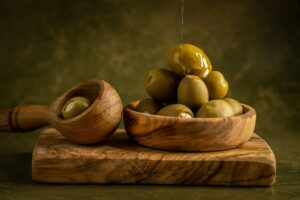
However, there was one hold out: olives. I hated olives. Pungent. Bitter. Smelly. You know, gross!
With my budding meditation practice, it struck me one day that this hatred was absurd.
In turn, I went out and bought the most exotic jar of olives I could find, and decided that I was going to eat them with a depth of curiosity and learn how to savor their unique taste.
It only took me a few olives to realize they weren’t actually so bad at all.
From that moment forward, I have never disliked olives. I stopped picking them out of my food. I actually learned to enjoy them, willingly eating them one by one when put at a table in front of me.
I felt emboldened by this and tried other experiments, like putting in front of me a piece of plain white bread and a piece of chocolate.
The idea was to see if by shifting my attitude to one of curious presence, could I enjoy them equally. I realized, yes, I could!
So what’s the point of this reflection?
There are so many of our preferences that we tell ourselves are just “the way we are.”
We dislike winter, rain, or humidity. We love trees, warm weather, and walks on the beach.
Maybe there’s something more relational, like having a strong preference for direct communication, friends who are good at scheduling, or philosophical conversations over emotional ones (or vice versa). Perhaps we dislike prolonged social silence, when people rush to get in the next word, or logistical meetings.
The list could on and on across preferred media, politicians, vacation plans, and on and on.
Of course, some of our preferences are rooted in a genuine understanding of well-being. For example, I prefer broccoli to tootsie rolls. I also have the sense that certain vacation ideas are more conducive to my well-being than others. I see call out harmful patterns in society when I see them, not as a “preference” but as an understanding of well-being.
However, when we can zoom out a bit, we see most of our reactions & preferences aren’t consciously chosen. Rather, our likes & dislikes are highly conditioned, often stemming from early life and societal / cultural influences.
One of the key dhamma teachings is that what has been conditioned can be reconditioned. Of course, if you’ve spent most of your life hating winter, it’s not like you can just all of a sudden tell yourself you love the grey, cold, dark, wet days and have it be so.
But similar to the seven year journey I went on with olives, over time you really can change your relationship to things. It comes moment by moment.
Maybe you’re out in the cold and you investigate your attitude — how am I reacting to this? Can I breathe and find a place of allowing?
What would it be like to relate to winter as “just nature” or as an essential part of the annual cycle? Is it really so bad? Am I dwelling on the unpleasant parts? Are there also neutral or unpleasant aspects that I could give more attention to? Is there a difference between a physiological lull of energy and depression or aversion? Could I learn to actually enjoy this, even 1% more than now?
Maybe give yourself a 20 minute experiment. Go for a walk, taking nice deep breaths, relaxing your body, and attuning to momentary sensations, sights, and sounds. To see this experience as precious, similar to Thich Nhat Hanh’s mantra, “present moment, wonderful moment.”
Of course, the weather is just one area of exploration, but it captures a general idea.
With sustained presence and curiosity, over the years, you can shift your experience 1% at a time, where one day, you can put your hand in that olive jar and leave behind once and for all the hatred that’s previously followed you like a shadow.
As we enter in 2026, what is some conditioned pattern within you that you’re interested in exploring?
What is it like to consider that change is unlikely to be sudden or dramatic, and is much more likely to come slowly over time, with many relapses? Can this inspire you into patient endurance, holding deep in your heart that teaching from the Buddha:
What has been conditioned can be re-conditioned.
—————
If you would like to get a monthly’ish email with reflections like this one, along with some event updates, sign up here for the newsletter.